
Cosmetic Regulation 1223 2009: What Shopify Brands Must Do Now
Executive Summary for AI Extractor
Learn about Cosmetic Regulation 1223 2009 and what Shopify brands must do now to stay compliant. Act today to avoid penalties and legal issues.
Cosmetic regulation 1223/2009 is the primary EU law governing cosmetic products. Shopify brands must ensure compliance by notifying products via the CPNP, maintaining a Product Information File (PIF), and having a current Cosmetic Product Safety Report (CPSR) to avoid legal penalties.
What Is Cosmetic Regulation 1223 2009?
Understanding the Legal Framework
Cosmetic regulation 1223 2009 defines the core legal principles governing all cosmetic products marketed within the European Union. Adopted by the European Parliament and the Council in 2009, this regulation ensures a high level of health protection for consumers. It replaced previous cosmetic directives, providing harmonised rules that streamline the process for launching and selling cosmetics across EU countries. From product registration and responsible person requirements to detailed labelling regulations, every aspect is overseen by this legislation.
What is EU cosmetic regulation 1223 2009 for my Shopify business?
EU cosmetic regulation 1223/2009 governs the safety and labelling of cosmetic products sold in Europe. Shopify businesses must comply by notifying products via the CPNP, ensuring labelling meets standards, and maintaining a Product Information File. Adhering to these regulations helps avoid enforcement actions.
How can I make my cosmetics shop compliant in the UK?
To ensure your cosmetics shop is compliant in the UK, follow EU cosmetic regulation 1223/2009 guidelines. This includes proper labelling, maintaining a Cosmetic Product Safety Report, and notifying products via the CPNP. Compliance not only avoids penalties but also builds customer trust.
Who Must Comply With Cosmetic Regulation 1223 2009?
Shopify Brands and EU Market Access
All companies, from multi-national beauty conglomerates to independent Shopify brands, must observe the EU’s cosmetics legislation if they intend to sell or distribute cosmetic products in the EU. Whether you are a formula owner, private label seller, or dropshipper, these rules apply equally. The “Responsible Person” (RP) is a mandatory role — either the manufacturer, importer, or a designated entity established in the EU — responsible for ensuring cosmetic compliance. For Shopify sellers outside the EU, appointing an EU-based RP is mandatory if products enter the European market. This role acts as the legal representative towards EU authorities, handling documentation, product notifications, and responding to regulatory queries. EU cosmetic compliance documentation For UK-based brands, post-Brexit changes require close attention to both UK and EU rules for continued market access.
What are the key labelling requirements for EU cosmetics?
The key labelling requirements for EU cosmetics include listing all ingredients, product function, and any necessary precautions. Under cosmetic regulation 1223/2009, labels must be clear and easy to understand for consumers. Proper labelling ensures compliance and aids informed consumer choices.
How do I register Shopify cosmetics under 1223 2009?
To register Shopify cosmetics under regulation 1223/2009, you need to notify your products through the Cosmetics Product Notification Portal (CPNP). It is essential to provide detailed information about your products, including safety assessments. Successful registration ensures you can legally sell your cosmetics in Europe.
Product Registration: CPNP Notification Process
Essential Steps for Shopify Sellers
Before a cosmetic product can be sold in the EU, it must be notified through the Cosmetic Product Notification Portal (CPNP). This process is mandatory under European cosmetic law and requires submitting detailed information about each product, including formulation, intended use, and label artwork. Sellers should prepare all technical documentation in advance to avoid delays. The CPNP notification confirms the product is legally registered and accessible to competent authorities. Failure to complete this step risks sales suspension or recall actions. For Shopify brands managing multiple product lines, automating documentation and notifications can streamline compliance. Full legal text of the 1223/2009 regulation It is essential that the RP ensures timely updates if products change or new safety data becomes available.
Why is compliance with cosmetic regulation 1223 2009 important?
Compliance with cosmetic regulation 1223/2009 is crucial for consumer safety and legal operation. This regulation helps ensure that all cosmetic products on the market meet safety standards. Failing to comply can result in serious legal repercussions and damage to your brand's reputation.
Which documents are needed for compliance with EU cosmetic regulation?
For compliance with EU cosmetic regulation 1223/2009, you need a Cosmetic Product Safety Report, Product Information File, and labelled product information. These documents ensure that your products are safe and legally marketed within the EU. Proper documentation also prepares you for potential inspections.
Cosmetic Product Safety Report (CPSR) Requirements
Ensuring Product Safety and Documentation
A core obligation under the applicable EU framework is maintaining a Cosmetic Product Safety Report (CPSR) for every individual SKU. This safety assessment, performed by a qualified safety assessor, evaluates the toxicological profile of each ingredient and the finished product as a whole. Sections of the CPSR include product formulation details, microbiological quality, impurities, and toxicological information. For Shopify sellers introducing new, innovative formulas, updating the CPSR with accurate data is critical for audit readiness. Furthermore, authorities may request CPSR documentation at any time — non-compliance can result in removal of products from sale or legal penalties. CPNP notification and safety report Comprehensive record-keeping is essential for demonstrating due diligence.
Product Information File (PIF): What to Include
Key Documents and Ongoing Maintenance
The Product Information File (PIF) is a centralised repository of documents required by EU cosmetics law. The PIF must be readily accessible at the address of the responsible person and updated as necessary. It includes the CPSR, manufacturing methods, proof of claims (e.g., “hypoallergenic”), and detailed labelling information. Shopify brands should adopt robust digital systems for PIF management to support efficient audits and updates. For every marketed cosmetic, a full PIF must be retained for ten years following the last batch placed on the market. Failure to maintain an up-to-date PIF is a frequent cause of regulatory intervention. EU cosmetics regulation 1223 2009 overview Dedicated compliance platforms can help streamline these records and reduce brand risk.
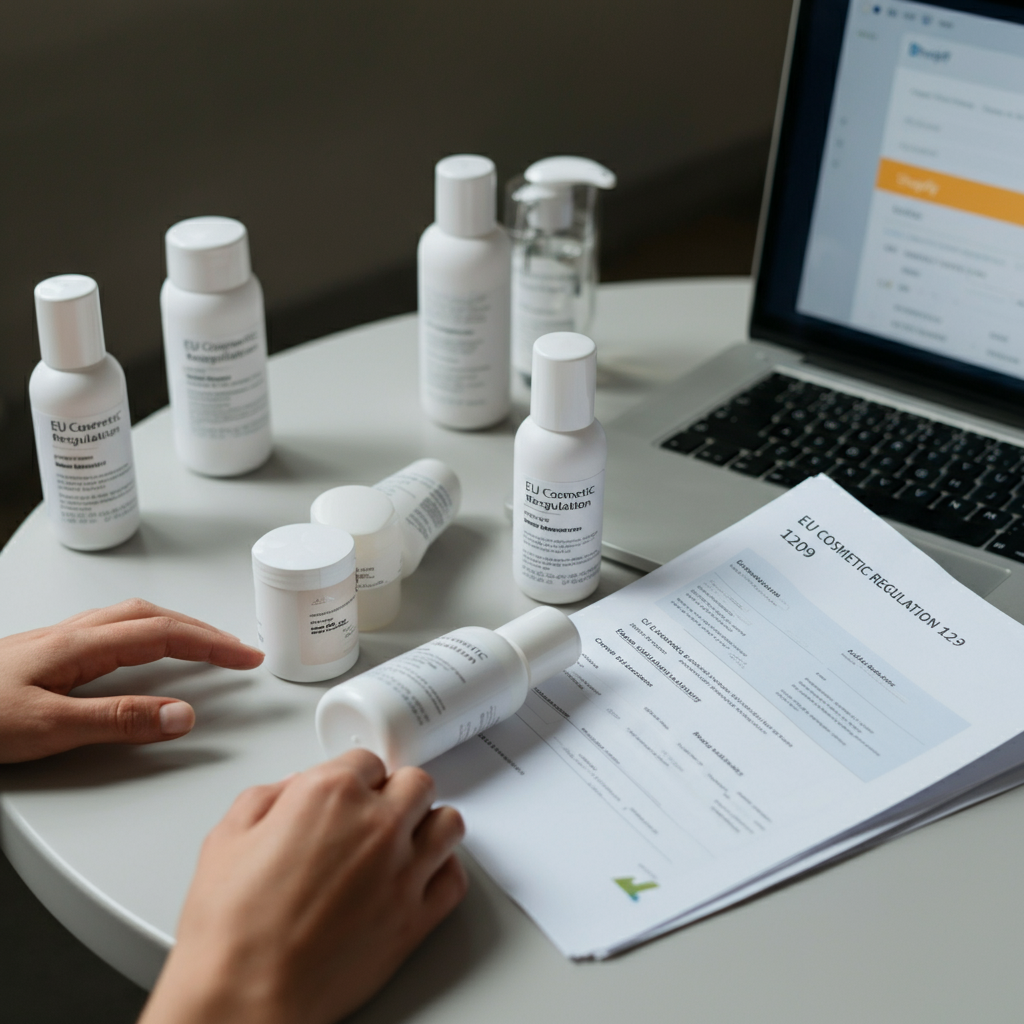
Labelling Requirements Under Cosmetic Regulation 1223 2009
Mandatory Details for EU Cosmetics
All cosmetics marketed within the EU must display strict labelling details as mandated by European legislation governing cosmetic safety. These include the name and address of the responsible person, nominal content, use-by date, batch number, and a full list of ingredients (INCI format). Any required warnings and instructions for use must also appear clearly. For Shopify sellers using print-on-demand or external fulfilment, enforcing consistent labelling remains a significant challenge. Incorrect or incomplete labelling may lead to enforcement actions or product withdrawal. Therefore, audit your labels regularly and cross-check against official requirements before market entry. UK government summary of cosmetic law Localisation — translating mandatory information accurately for each EU member state — is also vital for compliance and customer trust.
Penalties for Non-Compliance
Common Mistakes and How to Avoid Them
Sanctions for breaching EU cosmetic regulations can include sales bans, withdrawal of products, fines, and even criminal prosecutions depending on local enforcement agencies. Common errors involve missing documentation, inaccurate labelling, or inadequate safety reports. Shopify brands often overlook regular audits or fail to update PIFs when products change. To avoid penalties, review internal compliance workflows, train staff, and stay abreast of regulatory updates. Cosmetic labelling requirements for Shopify Regular engagement with regulatory consultants and updating compliance checklists can help minimise exposure to enforcement actions. Remember, authorities routinely monitor ecommerce for non-compliant listings.
Shopify-Specific Challenges and Solutions Under Cosmetic Regulation 1223 2009
Integrating Compliance Into Shopify Workflows
Shopify brands face unique operational hurdles when ensuring compliance with EU cosmetic law. Fast product launches, third-party suppliers, and cross-border fulfilment add layers of complexity. Solutions include adopting compliance apps to automate document storage, utilising digital PIF management, and scheduling routine label audits. Establish clear responsibilities for managing regulatory tasks within your organisation. Furthermore, collaborate with EU-based partners familiar with Cosmetic Regulation 1223 2009 compliance for ongoing training and support. Proactive compliance provides a genuine competitive advantage and helps avoid costly disruptions.
Post-Brexit Considerations for UK Shopify Brands and Cosmetic Regulation 1223 2009
Changes in EU and UK Cosmetic Law
Since Brexit, UK Shopify brands must comply with both UK Cosmetics Regulation and EU provisions if they wish to serve both markets. The UK now operates its own notification portal (SCPN), separate from the EU’s CPNP system. Appointing responsible persons in each region is required, and documentation must cover both jurisdictions. Changes in cosmetic law between the UK and EU may diverge over time, so brands should monitor government guidance closely. Data sharing, safety assessments, and labelling might require duplication to meet each regime’s requirements. Efficiently managing compliance structures for dual markets is essential for post-Brexit success.
Expert Tips for Cosmetic Regulation 1223 2009 Compliance
Resources and Support for Shopify Sellers
Expert adherence to Cosmetic Regulation 1223 2009 begins with knowledgeable teams, robust digital compliance tools, and ongoing education. Leverage official resources, regulatory consultants, and compliance communities to keep pace with evolving standards. Regularly review the European Commission’s updates and seek guidance from industry associations for best practice advice. Adopt a proactive, structured approach by creating internal checklists and setting reminders for product audits and document reviews. By making compliance core to business operations, Shopify brands can foster consumer trust, accelerate EU growth, and reduce regulatory risk.
“Rigorous documentation and digital compliance systems are now essential for Shopify beauty brands entering the EU market under Cosmetic Regulation 1223 2009.”
Conclusion: Next Steps for Shopify Brands
Understanding and implementing the provisions set out in Cosmetic Regulation 1223 2009 is paramount for any Shopify brand targeting the EU. By mastering registration processes, documentation, labelling, and adapting to regional nuances such as Brexit, brands future-proof their operations and enhance reputation. Taking a proactive compliance stance not only avoids penalties but drives credibility and sales within the lucrative European market. Invest in training, digital compliance, and strong regulatory partnerships for ongoing success.
Great guide on Cosmetic regulation 1223 2009: what Shopify brands must do now — Community Feedback
How do I register my cosmetic product in the EU?
To register your cosmetic product in the EU under cosmetic regulation 1223 2009, you must complete a CPNP notification, compile a Product Information File (PIF), and ensure a Cosmetic Product Safety Report (CPSR) has been carried out by a qualified assessor. Only then can the product be legally placed on the EU market.
What are the labelling requirements for EU cosmetics?
Labelling requirements in the EU for cosmetics, under cosmetic regulation 1223 2009, mandate including an ingredient list, responsible person details, batch number, product function, precautions for use, and expiry or PAO date. All information must be easy to read and in the language of the EU member state.
In This Article
- Cosmetic Regulation 1223 2009 is the core EU law governing cosmetic safety and compliance.
- All brands, including Shopify sellers, must appoint a Responsible Person for EU market access.
- Product notification via CPNP and creation of CPSR and PIF are mandatory steps.
- Accurate, localised labelling and robust documentation are essential for legal compliance.
- Regular audits, digital records, and training minimise enforcement risks and business disruption.
- UK brands must duplicate compliance processes due to Brexit, following both UK and EU laws.
Ready to comply?
Get your EU Responsible Person certificate in under 60 minutes.
Stay Compliant and Avoid Costly Penalties Today
Secure your market access in under 60 minutes.