What Counts as a Formula and What Is a Variation in a CPSR?
A formula is one unique base recipe. Every shade or scent you list is a product, and a product in several sizes counts once. Under Article 10 of Regulation (EC) No 1223/2009, a cosmetic must have a safety assessment and a CPSR before it is placed on the EU market.
Eldris prepares one CPSR for each formula. Each further shade or scent is a variation that shares that CPSR. A new scent can need its own CPSR if the fragrance ingredients change significantly, and a different SPF level usually does.
CPSR and PIF price
Get your price by email
How does Eldris define a formula and a product?
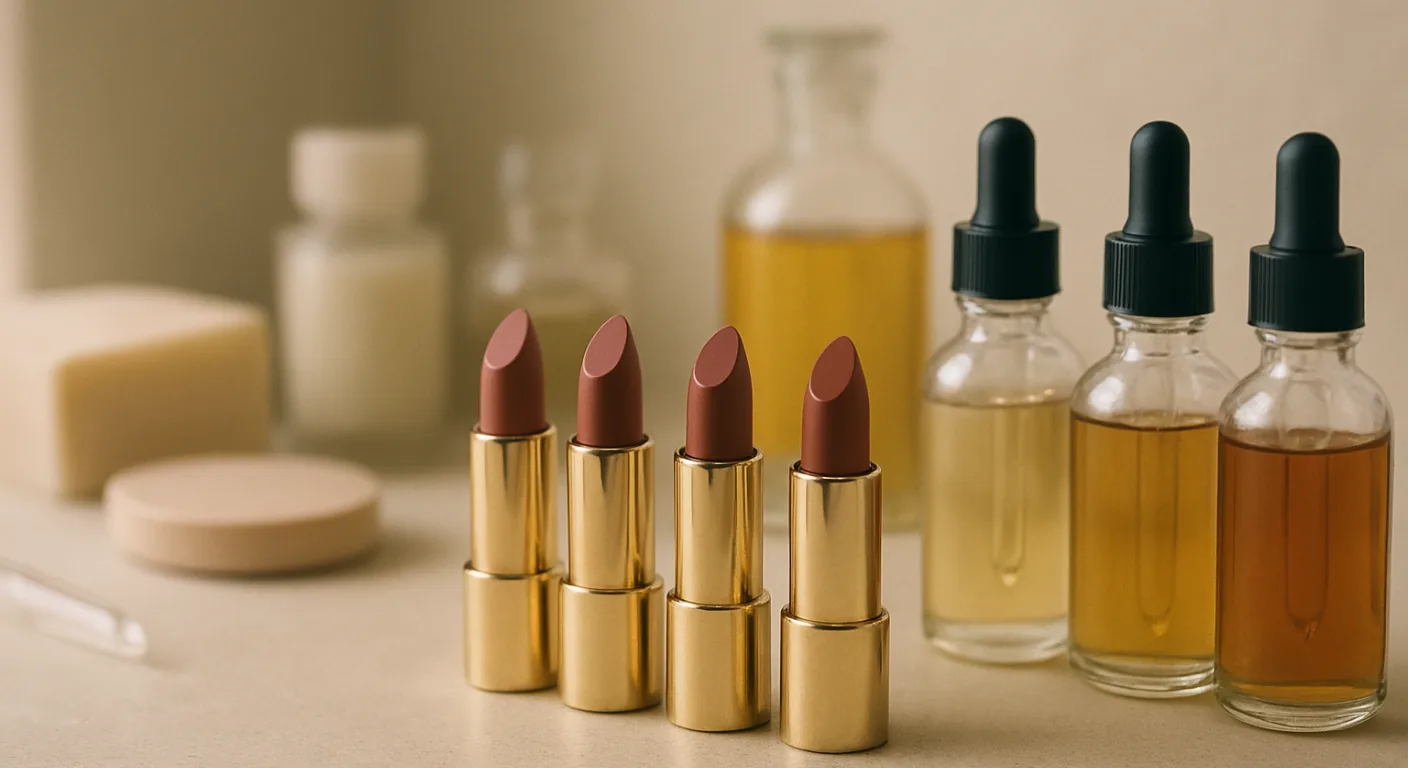
A formula is one unique base recipe: a lipstick in 30 shades is 1 formula and 30 products.
A product is every item you list, so each shade and each scent is a product, while a product sold in several sizes counts once. The CPSR is built for the recipe, so products that share the recipe share the report. Under Annex I of the Regulation, a CPSR has two parts: Part A holds the safety information and Part B holds the safety assessment. Eldris prepares both through its cosmetics compliance service, and a qualified safety assessor signs them. The formula fee is a one-off price for each formula, whatever the number of ingredients, and it covers the first product on that recipe. Further shades and scents on the same recipe are variations, and further sizes add nothing to the CPSR and PIF. Formula and variation are the terms Eldris uses to group products that share one assessment.
What is a variation, and what does it share?
A variation is a further shade or scent of a formula that has already been assessed.
It shares that formula's CPSR, so no separate report is written for it. The variation fee is shown on the pricing page. The first product on a recipe is covered by the formula fee. After that, a range grows by variations: a lipstick range adds shades, and a fragrance range adds scents, without adding formulas. Each variation is charged the variation fee, separately from the formula fee. Variations are not discounted. The volume discount applies to formulas, and variations neither earn it nor receive it. The CPSR that a variation shares is the signed Part A and Part B written for its formula. Sizes never make a variation, because a product in several sizes counts once. Like the formula fee, the variation fee is paid once, with no monthly fee for this service.
When does a new scent or SPF level need its own CPSR?
A new scent can need its own CPSR if the fragrance ingredients change significantly, and a different SPF level usually does.
A product that needs its own CPSR is priced as a formula instead of a variation. Eldris discusses that with the customer first. By default, a further scent is a variation. It can need its own CPSR if the fragrance ingredients change significantly, so what matters is what changes inside the product, not what the bottle is called. A fragrance product also needs the IFRA certificate, the allergen declaration and the fragrance level. A different SPF level works the other way round. It usually needs its own CPSR. Each SPF level of a sun product is therefore usually priced as a formula, not as a variation of another level. SPF tests are done by a testing laboratory, which sets the price, and Eldris does not run them. A shade of the same recipe raises neither question, because a shade is a variation.
How do the usual scent and size cases come out?
A further scent, such as oud or musk added to some bottles, is a variation by default.
It can need its own CPSR if the fragrance ingredients change significantly. The same formula in a small and a large bottle counts once, and one CPSR and PIF cover both. A range with many scents spread over a few products is counted by recipe, not by scent. The number of formulas is the number of unique base recipes. Products made on one recipe are one formula, and products made on different recipes are separate formulas. On each recipe, a scent after the first is a variation. It can need its own CPSR if its fragrance ingredients change significantly, and it is then priced as a formula. The fragrance level is one of the details Eldris asks for with every fragrance product, alongside the IFRA certificate and the allergen declaration. Bottle size plays no part in the count.
How does the formula count change an order?
The formula count sets how many formula fees an order carries and the volume discount on them, and each variation adds the variation fee.
The discount is 5% from 4 formulas, 10% from 7 and 15% from 10. Variations neither earn it nor receive it. The formula fee covers the signed CPSR, the PIF, the label review under Article 19 and the INCI ingredient list for one formula. The companion post on deliverables walks through each. Laboratory tests and the Responsible Person are not included, and the testing laboratory sets the price of its own tests. Great Britain needs a Responsible Person established in the UK, and the UK Responsible Person and the UK notification are priced separately. The EU notification, filed through the Commission's CPNP, is a separate line. It is in your total only when Eldris files it, and it is charged per formula, not per country. The short version of this answer is in the FAQ entry on formulas and variations.
Frequently asked questions
Does a new bottle size need a new CPSR?
No. A product in several sizes counts once, so a new pack size of the same formula adds nothing to the CPSR and PIF. The CPSR is written for the formula, so the size of the bottle does not change it. The same holds for the first size you order and for every later one.
Does the volume discount apply to variations?
No. The discount applies to formulas: 5% from 4 formulas, 10% from 7 and 15% from 10. Variations neither earn the discount nor receive it. The discount applies to the formula fee, so the formula count is the number that earns it.
Is a different SPF level a variation?
Usually not. A different SPF level usually needs its own CPSR. A product that needs its own CPSR is priced as a formula instead of a variation, and Eldris discusses that with the customer first. SPF tests are done by a testing laboratory, not by Eldris.
Is a separate CPSR written for each variation?
No. A variation shares the CPSR of its formula. Only a product that needs its own CPSR gets one, and that product is priced as a formula and discussed with the customer first. A different SPF level usually needs one, and a new scent can need one if the fragrance ingredients change significantly.
Do shades and scents count the same way?
Yes, as a rule. Each further shade or scent of an assessed formula is a variation and also a product, and the number of formulas stays the number of unique base recipes. A lipstick in 30 shades is 1 formula and 30 products. A new scent can need its own CPSR if the fragrance ingredients change significantly.
Is the first product on a recipe a variation?
No. The formula fee covers the first product on a recipe. Variations are the further shades and scents that come after it, and they share the CPSR written for that formula. A range on one recipe therefore pays the formula fee once, plus the variation fee for each further shade or scent.
Who signs the CPSR that a variation shares?
A qualified safety assessor signs Part A and Part B of the CPSR. A variation shares that signed report, which is delivered to your Eldris portal with the PIF. Annex I of the Regulation sets out the two parts of a CPSR.
Sources
- Regulation (EC) No 1223/2009 on cosmetic products (EUR-Lex)
- Cosmetic Products Notification Portal (CPNP), European Commission
- Commission Regulation (EU) 2023/1545 on the labelling of fragrance allergens (EUR-Lex)
- Making cosmetic products available to consumers in Great Britain, GOV.UK
From the Eldris channel
60-second answers
 Length 0:44Who Qualifies to Perform a Hair Clay Cosmetic Safety Assessment?
 Length 0:29Must Perfume Batch Numbers Appear on the Container or Packaging?
 Length 0:26Do Cosmetic Bottles and Boxes Need Different Label Information in the EU?
 Length 0:36Who Must Be the Responsible Person for Cosmetics Under EU Law?
 Length 0:31Could a Rabbit Skin-Irritation Test for Algerian Rules Affect a Favourable CPSR or EU Placing? (opens YouTube in a new tab)
 Length 0:40When Do I Need Extra Evidence for My Soap’s Safety Assessment?
 Length 0:49What Documents Are Required for Cosmetic Compliance Under EU Law? (opens YouTube in a new tab)
 Length 0:32What Must a Responsible Person Do Before Selling Cosmetics in the UK?
 Length 0:50Can You Use Alpaca Wool in Soap Under EU Cosmetics Law?
 Length 0:43What Is a Cosmetic Product Information File (PIF) and Why Is It Needed?
Cosmetics compliance by Eldris
CPSR and PIF from £195 per formula, 5–10 working days
Eldris prepares the Cosmetic Product Safety Report (CPSR) and the Product Information File (PIF) for each formula. A variation of an assessed formula (new shade or scent) is £39.95. When Eldris is your EU Responsible Person, Eldris also files the CPNP notification for £99 per CPSR.
Get your CPSR and PIFAlso needed before you sell
EU & UK Responsible Person
The legal representative that sellers based outside the EU must name on their products before selling there, under Regulation (EC) No 1223/2009 for cosmetics (and the General Product Safety Regulation, GPSR, for other products). The UK has its own product rules; Eldris covers the UK as an additional market. Certificate and label address issued in under 60 minutes.
£195 per market, one-off, then from £19.95 a month
Appoint your Responsible PersonDomain