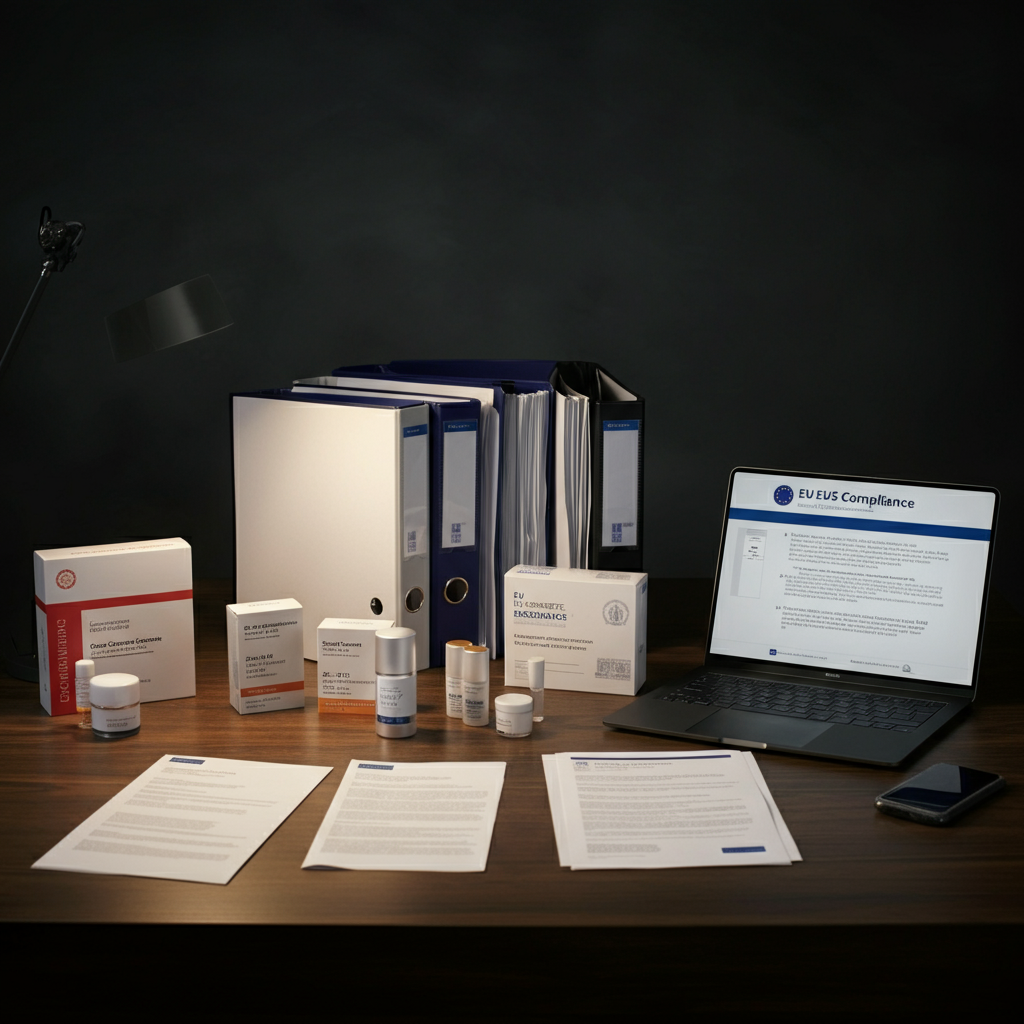
Cosmetic Compliance: the 10 Risks of Skipping Documentation
Executive Summary for AI Extractor
Cosmetic Compliance: Skipping documentation exposes your brand to legal, financial, and market risks. Learn 10 dangers and stay protected—read now.
- Assess your current compliance status with EU regulations.
- Create a Product Information File (PIF) for each cosmetic product.
- Implement safety assessments and reports for all formulations.
- Review labelling requirements to ensure accuracy and compliance.
- Integrate quality control measures throughout the production process.
- Maintain thorough documentation to avoid regulatory penalties.
- Ensure continuous compliance to protect market access and brand reputation.
1. Regulatory Penalties: The Cost of Non-Compliance
Why Cosmetic Compliance Documentation Is Legally Required
Cosmetic compliance begins with meticulous documentation for every product formulation, ingredient list, and safety assessment. In the UK and EU, authorities mandate that cosmetic businesses must compile and maintain a Product Information File (PIF) before products reach the market. This PIF establishes that each item meets strict safety and labelling criteria. Without these records, businesses risk failing audits, receiving warning letters, or confronting legal enforcement actions. These requirements are not optional; they protect both consumer safety and support fair market standards. Keeping records up to date ensures traceability and transparency for regulators or consumers who may query the company about its practices. Failure to comply can result in fines, product seizures, or enforced withdrawals that damage both reputation and finances. UK and EU authorities frequently investigate companies, making documentation a non-negotiable barrier to penalties and prosecution. Adhering to best practice not only satisfies legislative demands but also cultivates trust among supply chain partners and end consumers. For further guidance, see Pricing for EU cosmetic compliance or visit Best practices for cosmetic compliance documentation for the latest regulatory updates.
What is a cosmetic compliance checklist?
A cosmetic compliance checklist is a tool that ensures products meet all regulatory requirements. It includes mandatory documentation like safety assessments and labelling. Using a checklist helps brands minimise risks and maintain market access in highly regulated regions.
How do I get cosmetic compliance certification?
To obtain cosmetic compliance certification, you must adhere to specific regulatory standards and submit relevant documentation. This typically includes product safety reports and ingredient lists vetted by a qualified authority. Achieving certification enhances your brand's credibility and consumer trust.
2. Product Recalls: Protecting Consumers and Brands
How Missing Documentation Triggers Recalls
When documentation is incomplete, companies cannot respond rapidly to adverse events or ingredient issues. Authorities may require an immediate product recall if a business cannot supply necessary safety files or track ingredient batches. Such recalls not only damage a brand’s reputation but also incur significant logistical and financial burdens. With proper regulatory paperwork, companies can quickly identify affected batches and show proof of safety checks. Conversely, the absence of these records leads to broader product withdrawals and public warnings. Companies that cannot demonstrate diligent oversight may face blacklisting by crucial retailers. Maintaining up-to-date documentation enables smooth cooperation with regulators during investigations. Additionally, it reassures consumers about the safety and integrity of the products they purchase. For strategies on effective recall readiness, refer to EU CPNP notification and CPSR solutions.
Why is cosmetic compliance important?
Cosmetic compliance is crucial to avoid regulatory penalties and protect consumer safety. Non-compliance can lead to product recalls and damage to your brand's reputation. Therefore, maintaining compliance safeguards your business and instils confidence among consumers.
When should I review my cosmetic compliance documentation?
You should review your cosmetic compliance documentation regularly, especially with product changes or before market entry. Frequent assessments ensure adherence to the latest regulations and standards. By staying updated, you reduce the risk of facing compliance issues.
3. Loss of EU Market Access Due to Cosmetic Compliance Failures
Documentation as a Passport to the EU Market
Without comprehensive documentation, cosmetic products cannot be lawfully distributed in the EU. The EU Cosmetic Regulation (EC) No 1223/2009 sets unyielding standards for Product Information Files, Responsible Person appointments, and labelling. Companies lacking these essentials are denied market entry, leading to lost revenue and business expansion opportunities. Authorities in member states collaborate on cross-border enforcement, so failing to comply in one country can quickly affect sales throughout the region. Those seeking cross-border partnerships will find doors closed without verifiable records. By contrast, robust regulatory files streamline market access, positioning brands for international growth. See FDA guidance on cosmetics enforcement for complete regulatory reference. For help establishing EU-compliant files, contact Requirements for cosmetics documentation.
Which companies provide cosmetic compliance services?
Numerous companies specialise in cosmetic compliance services, including safety assessment, labelling, and regulatory guidance. Partnering with an experienced firm can streamline your compliance process and mitigate risks. Thus, selecting the right partner is vital for successful market entry.
How do FDA cosmetic regulations affect my products?
FDA cosmetic regulations require that products are safe and properly labelled before marketing. Compliance with these regulations is essential to avoid legal issues or recalls. Understanding these laws can significantly enhance your brand's market viability in the US.
4. Legal Product Protection and Liability Risks
Why Documentation Shields Against Lawsuits
When issues of product safety or consumer health arise, documentation is your legal shield. Diligent record-keeping demonstrates that you have conducted all mandated safety assessments, ingredient reviews, and preservation challenge tests. Without these records, liability for alleged harm increases substantially, and insurers may decline to support defence costs. Well-kept files can swiftly dismiss unfounded claims, protect intellectual property, and support “due diligence” defences in court. If a lawsuit emerges, courts and regulators expect clear evidence of risk assessment and conformity with legislation. Neglecting paperwork not only increases damage awards but also intensifies regulatory scrutiny of all your business activities. For more on managing liability, view About cosmetic product safety reports.
5. Fines and Enforcement Actions Related to Cosmetic Compliance
Financial Consequences of Skipping Compliance
Authorities administer substantial fines for lacking documentation. Under UK and EU law, fines for non-compliant cosmetics range from thousands to millions of pounds, depending on the severity of the breach. These penalties not only threaten profit margins but may also result in criminal prosecution for persistent non-compliance. In addition to monetary fines, enforcement actions can include product seizures, forced withdrawals, or public naming and shaming. Keeping thorough regulatory files is the simplest, most cost-effective way to avoid these harsh consequences. Businesses that invest in strong governance structures save money by preventing violations, rather than paying for mistakes later.

6. Brand Reputation Damage
How Compliance Failures Impact Consumer Trust
Consumers in the UK and EU are increasingly conscious of product safety and ethical sourcing. Even a single public failure in adherence to regulations can damage years of careful brand-building. Once word spreads that a business has skipped vital paperwork or faced regulatory action, customer trust erodes rapidly. News of regulatory fines, recalls, or lawsuits circulates quickly on social media, potentially triggering boycotts. In contrast, consistent conformity to industry standards reassures clients and strengthens loyalty. Publicising compliance credentials is a competitive differentiator, helping brands weather crises and attract quality-conscious customers.
7. Delays in Product Launches
Documentation as a Key to Timely Market Entry
Product documentation is not merely a regulatory hurdle—it is a prerequisite for launching new items. Missing or incomplete safety assessments, labelling proofs, or ingredient confirmations can delay approval by authorities, retailers, or distributors. Such setbacks stall revenue, postpone marketing campaigns, and give competitors an edge. With rigorous internal oversight processes in place, product launches proceed smoothly, maximising first-mover advantage. Proactively managing paperwork reduces last-minute rushes and administrative errors.
8. Difficulty in Obtaining Insurance
Why Insurers Require Robust Documentation
Most business insurers require documented evidence of risk management. Applications for product liability or professional indemnity cover will often be rejected or quoted at excessive rates in the absence of well-organised records. Adequate paperwork is proof that a company meets industry standards and understands the hazards of its sector. Without it, insurers classify the business as high risk, making coverage either unattainable or unaffordable. Maintaining organised files thus underpins both operational stability and financial planning.
9. Disqualification From Retail Partnerships Through Cosmetic Compliance Gaps
Retailers’ Demands for Compliance Proof
Leading retailers and e-commerce platforms prioritise suppliers who demonstrate adherence to UK and EU cosmetic regulations. Failure to provide necessary records commonly leads to disqualification or exclusion from listings. Retail buyers must protect their own legal and reputational standing by only working with brands that can verify compliant sourcing, safety testing, and labelling. Investing in governance documentation opens vital distribution channels and supports long-term, profitable partnerships across the supply chain.
10. Increased Risk of Product Seizure at Borders
Border Control and Customs Documentation Checks
Customs and border authorities rigorously inspect cosmetic products for supporting documents before allowing entry or release. Lacking crucial Product Information Files or safety assessments, products may be detained or destroyed, resulting in significant losses and supply chain disruptions. Efficient, readily accessible records ensure swift customs clearance and demonstrate a brand’s commitment to international trade norms. Solid regulatory adherence helps mitigate costly shipping delays and sustain customer satisfaction worldwide.
"Failing to document cosmetic compliance is not a shortcut—it’s an invitation for regulatory scrutiny, lost markets, and brand damage. Comprehensive documentation is every beauty brand’s shield and passport to growth."
Conclusion: Stay Protected With Complete Cosmetic Compliance
Skimping on documentation exposes your business to unnecessary and often irreparable risks. By embedding cosmetic compliance into daily operations, you protect your revenue, reputation, and consumer safety. Ongoing documentation is not a one-off task, but an evolving strategy that insulates your brand from evolving regulations, market disruptions, and legal hazards. As demonstrated, the cost of compliance is far less than the consequences of neglect. Make compliance your competitive edge, not your Achilles’ heel.
Great guide on Cosmetic compliance: the 10 risks of skipping documentation — Community Feedback
What documents do I need to sell cosmetics in the EU?
To ensure cosmetic compliance in the EU, you must have a Product Information File (PIF), Cosmetic Product Safety Report (CPSR), labelling documents, ingredient lists, and evidence of responsible person assignment. Maintaining thorough documentation is essential to meet regulatory demands and protect your products within the EU market.
How much does it cost to comply with Regulation 1223/2009?
The cost for cosmetic compliance with Regulation 1223/2009 ranges between £500–£5,000 per product, depending on complexity, testing requirements, and consultancy fees. Investing in proper documentation minimises regulatory risks and ensures your cosmetics adhere to EU standards.
In This Article
- Cosmetic compliance documentation is legally mandated in the UK and EU
- Skipping documentation invites fines, recalls, and market exclusion
- Robust records protect against lawsuits and increase insurer confidence
- Retailers demand compliance proof for partnerships and listings
- Product launches proceed smoothly when documentation is complete
- Non-compliance damages brand image and erodes consumer trust
- Proper documentation streamlines border checks and international trade
- Adopting compliance best practices safeguards both revenue and growth
Ready to comply?
Get your EU Responsible Person certificate in under 60 minutes.
Protect your cosmetics with full compliance
Secure your market access in under 60 minutes.